
This isn't an oversight; it's a symptom of being a dedicated owner. You're focused on today's sales, tomorrow's payroll, and next month's inventory. Planning an exit that might be years away feels like a distant luxury.
This guide is designed to change that. We'll walk you through a clear, step-by-step process to create a strategic exit plan. The goal isn't just to sell your business—it's to maximize its value, ensure its legacy, and secure your personal financial future.
Key Takeaways
- Defines your roadmap for transferring ownership while maximizing business value.
- Helps secure a higher sale price, ensure business continuity, and lower tax burdens.
- Involves valuing your business, closing value gaps, and choosing the right exit path.
- Requires starting 5-7 years in advance to give you the most options and best outcome.
What is a Business Exit Plan? (And What It’s Not)
A business exit plan is a comprehensive, written document that outlines exactly how an owner will step away from their company. It’s a strategic guide that considers all the financial, operational, and personal details involved in transferring ownership. The primary goal is to create a deliberate process that maximizes the business's value and ensures you can achieve your personal goals after the sale.
It's easy to confuse an exit plan with other business concepts, but two distinctions are critical:
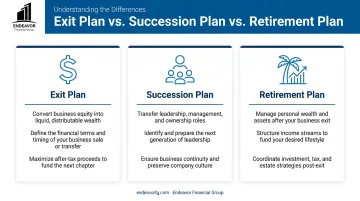
An exit plan is not a retirement plan. While your exit is a key part of retirement, the plan itself focuses specifically on converting the business into liquid wealth. A broader retirement plan determines how you'll use that wealth and other assets to live on.
An exit plan is more than a succession plan. A succession plan answers one question: "Who will take over leadership?" An exit plan is more comprehensive, covering the entire ownership transfer, your financial strategy, and your personal transition.
Why an Exit Plan is Your Most Important Business Strategy
Thinking about your exit isn't a sign that you're giving up. In fact, it's one of the most powerful strategic tools you have for growth. A well-designed exit plan, created years in advance, forces you to build a better, stronger, and more valuable company today.
Here are the key benefits of putting a plan in place early:
Maximizes Business Value
An exit plan makes you view your business through the eyes of a potential buyer. This shift in perspective helps you spot weaknesses you previously overlooked, such as being too dependent on a single client or having undocumented processes.
Addressing these issues doesn't just make your business more sellable; it makes it more profitable and resilient right now.
Provides Clarity and Direction
With a clear destination in mind, your daily decisions become more purposeful. Every choice—whether to invest in new equipment, hire a key manager, or develop a new service—can be weighed against its impact on your long-term exit goals. This creates a clear roadmap that aligns your business strategy with your personal financial objectives.
This proactive approach provides a critical advantage. According to the Exit Planning Institute, only about 20% to 30% of businesses that go on the market actually sell. A strategic plan dramatically increases your odds of being in that successful minority.
Prepares You for the Unexpected
Life is unpredictable. An exit plan acts as a critical safety net for your business, your employees, and your family if something unexpected happens. Exit planners often refer to the "5 D's"—events that can force a sudden and often unfavorable exit:
- Death
- Disability
- Divorce
- Disagreement (between partners)
- Distress (financial hardship)
Without a plan, any one of these events could destroy a lifetime of work. A formal plan provides a clear course of action, protecting the company’s value and ensuring your family is provided for.
How to Create Your Business Exit Plan: A 7-Step Guide
Building an exit plan is a methodical process. Follow these seven steps to create a comprehensive roadmap for your future.

Step 1: Define Your Exit Goals and Objectives
Before you look at a single spreadsheet, you need to look inward. The entire plan hinges on your personal and financial goals. Start by asking yourself some fundamental questions:
- When do you want to exit? Be specific. Is it a firm date in five years, or is it tied to a financial milestone?
- How much money do you need? Calculate the after-tax proceeds you'll need from the sale to fund your retirement, travel, or next venture.
- What will you do next? Do you want a clean break, or would you prefer to stay involved as a consultant or board member?
- Who do you want to sell to? Is preserving your legacy and company culture by selling to employees or family more important than getting the absolute highest price from a third party?
Step 2: Get a Professional Business Valuation
You can't plan a journey without knowing your starting point. A formal business valuation provides an objective, realistic baseline of your company's current worth. This isn't the time for a back-of-the-napkin estimate. A certified valuation expert will use established methodologies to provide a defensible number.
Common methods include:
- Asset-Based: Values the company based on the net value of its assets minus liabilities.
- Market-Based: Compares your business to similar companies that have recently sold. This often involves using EBITDA (Earnings Before Interest, Taxes, Depreciation, and Amortization) multiples.
- Income-Based: Calculates value based on the company's expected future earnings or cash flow.
Step 3: Identify and Close Your Value Gaps
The "value gap" is the difference between your company's current valuation (Step 2) and the value you need to achieve your financial goals (Step 1). Now, the real work begins: closing that gap.
Focus on improving key "value drivers" that buyers look for. These include:
- Reducing owner dependency: Can the business thrive without you?
- Strengthening the management team: Is there a capable team ready to lead?
- Creating recurring revenue streams: Are your sales predictable and stable?
- Diversifying your customer base: Are you overly reliant on one or two major clients?
- Documenting systems and processes: Can a new owner easily understand how the business operates?
Step 4: Choose the Right Exit Strategy
Your exit strategy must align with the goals you defined in Step 1. There's no single "best" option, only the one that's right for you. Common paths include selling to a third party, transferring to family, selling to employees, or liquidation. We'll explore these in more detail in the next section.
Step 5: Develop Your Management Succession Plan
A management succession plan is a critical component of your overall exit strategy. It's focused on ensuring leadership continuity so the business can operate seamlessly after you're gone. Key actions include identifying potential successors (whether internal or external), creating formal training and development plans, and documenting all key operational knowledge.
Step 6: Create a Contingency and Communication Plan
A successful exit involves more than transferring ownership; it requires careful communication. You'll need a clear plan for when and how to inform key stakeholders like employees, customers, and suppliers. This prevents rumors, maintains morale, and ensures a smooth handover.
Step 7: Integrate the Exit Plan with Your Personal Estate and Financial Plan
The proceeds from your business sale will have a major impact on your personal financial situation. It’s essential to coordinate your business exit plan with your personal estate and financial plans to ensure a tax-efficient transfer of wealth and protect your assets. Working with a financial advisory firm that specializes in exit planning can help create a clear, integrated roadmap for your life after the business.
Common Business Exit Strategies Explained
Choosing your exit path is one of the most significant decisions you'll make. Here’s a breakdown of the most common options.
Sale to a Third Party (Strategic or Financial Buyer)
This is often the best option for maximizing your sale price. A strategic buyer is a company in your industry looking to gain market share, technology, or talent. A financial buyer, like a private equity firm, is looking for a solid return on investment. This path typically offers a clean break but requires a formal sale process managed by a business broker or M&A advisor.
Management/Employee Buyout (MBO)
In an MBO, you sell the business to your existing management team or key employees. This is an excellent choice for preserving your company's culture and legacy. However, since employees often lack the capital for an all-cash deal, these transactions frequently involve seller financing, which means your payout could be spread over several years.
Employee Stock Ownership Plan (ESOP)
An ESOP is a way to sell the company to your employees through a qualified retirement trust. This structure offers significant tax advantages, including the potential to defer capital gains tax on the sale. However, ESOPs are complex and expensive to set up, making them best suited for larger, stable companies with consistent cash flow.
Family Succession
Transferring the business to the next generation can be emotionally rewarding but presents unique challenges. You must honestly assess your heir's readiness to run the company and create a plan that is fair to all children, whether they are involved in the business or not.
The statistics can be sobering: a study in the Harvard Business Review states that only about a third of family businesses survive the transition to the second generation.
Liquidation or "Orderly Shutdown"
This should be considered a last resort. Liquidation involves selling off all business assets, paying creditors, and closing the doors for good. This path almost always yields the lowest financial return because it fails to capture any of the intangible value you've built, such as brand reputation and customer goodwill.
Assembling Your A-Team for a Successful Exit
Trying to navigate a business exit alone is one of the biggest and most costly mistakes an owner can make. A successful transition is a team sport, and you need a roster of experienced professionals to guide you.
Your core exit planning team should include:
- A CPA or Tax Advisor to clean up your financials and structure the sale for maximum tax efficiency.
- An Attorney to handle all legal aspects, from drafting agreements to navigating due diligence and the final purchase contract.
- A Valuation Expert to provide an objective, defensible business valuation that anchors your asking price.
- A Certified Financial Planner (CFP®) to act as the team's quarterback, connecting the business sale to your personal financial goals.
Your financial advisor is essential for tying all these pieces together. They coordinate with the other professionals to ensure your business exit strategy aligns perfectly with your personal retirement and estate plans.
At Endeavor Financial Group, we specialize in this holistic coordination for business owners, helping convert your hard-earned business equity into a sustainable source of funds for your future.
Frequently Asked Questions
What should an exit plan include?
A complete exit plan should include your personal and financial goals, a professional business valuation, value enhancement strategies, your chosen exit path, a management succession plan, and a contingency plan for unexpected events.
What is a good exit strategy for a business?
The "best" strategy depends on your goals. A third-party sale usually maximizes price, while a family succession or employee buyout is often better for preserving a legacy.
What are the 5 D's of exit planning?
The 5 D's are five common events that can trigger an unplanned and often unfavorable exit: Death, Disability, Divorce, Disagreement (between partners), and Distress (financial trouble).
When is the best time to start creating a business exit plan?
The ideal time is 5 to 7 years before your desired exit date. This gives you enough time to build value and position the business for a successful, strategic sale instead of a rushed one.
How is an exit plan different from a succession plan?
A succession plan only identifies the next leader for the company. An exit plan is a complete strategy for how you, the owner, will transfer ownership and convert your business equity into personal wealth.
What is the biggest mistake business owners make in exit planning?
The most common mistake is waiting too long to start. This procrastination limits your options, reduces your potential sale price, and can force you to exit on unfavorable terms after an unexpected event.