
Common challenges often include different retirement dates, mismatched risk tolerances, and varying expectations for longevity. According to a 2024 study from Fidelity, about 45% of partners admit to arguing about money, with over a quarter identifying it as their greatest relationship challenge.
This guide provides a clear roadmap for couples. We'll cover why coordinated planning is essential, a step-by-step process to build a joint plan, key income strategies to consider, and how to navigate the challenges that are unique to planning as a team.
Key Takeaways
- Retirement planning for couples means merging two financial lives into one cohesive strategy to create a reliable "retirement paycheck."
- Key steps include defining shared goals, inventorying all assets, stress-testing the plan, and coordinating withdrawal and Social Security strategies.
- Success hinges on open communication to align on lifestyle, risk tolerance, and healthcare planning.
- Coordinated strategies for Social Security, RMDs, and taxes can significantly boost a couple's total retirement income.
- Professional guidance can help navigate complexities like age gaps, business ownership, and differing financial outlooks.
Why a Coordinated Retirement Plan is Critical for Couples
Planning your retirement finances in separate silos is one of the costliest mistakes a couple can make. A joint plan provides a holistic view of your total financial picture, preventing the gaps and redundancies that often occur when two people manage their money independently. This unified approach allows for a much more efficient use of your combined assets.
More importantly, a coordinated strategy optimizes critical retirement decisions. Timing Social Security benefits, for example, is completely different for a couple than for an individual. Making the right choice can mean tens of thousands of dollars in additional lifetime income.
In fact, a 2019 report found that suboptimal Social Security claiming decisions result in an average household loss of about $111,000 in potential income.
Beyond the numbers, there are significant emotional benefits. A shared plan fosters transparency, builds trust, and reduces financial anxiety. It ensures both partners are on the same page about their future, preventing conflicts and creating a foundation of mutual confidence as you step into retirement together.
How to Build Your Joint Retirement Income Plan: A 5-Step Process
Building a retirement income plan that lasts requires a structured approach. Following a clear process removes guesswork and aligns with the consultative method certified financial planners use. At Endeavor Financial Group, we use a similar framework to build confidence and clarity.

Step 1: Discovery and Goal Alignment
The first step is communication. Before looking at any account statements, have an open and honest conversation to define your shared vision for retirement.
Discuss what you both want your life to look like.
- Lifestyle: Do you plan to travel the world, take up new hobbies, or downsize to a smaller home?
- Timelines: Will you retire simultaneously, or will one partner continue working for a few years?
- Legacy Goals: Do you want to leave an inheritance for children or grandchildren, or support a favorite charity?
Aligning on these big-picture goals creates the foundation for your entire plan.
Step 2: Create a Comprehensive Financial Inventory
Next, consolidate all your financial information in one place to create a complete picture of your combined net worth.
Make a list of everything for both partners:
- Assets: 401(k)s, 403(b)s, IRAs, brokerage accounts, savings accounts, real estate, and any other investments.
- Liabilities: Mortgages, car loans, credit card debt, and any other outstanding loans.
- Guaranteed Income Sources: Social Security estimates, pensions, and any annuities.
This inventory provides a clear starting point and clarifies what resources you have to work with.
Step 3: Analyze and Stress-Test Your Plan
With your goals and inventory in hand, you can start projecting your future needs. Create a unified retirement budget that accounts for both essential living expenses and discretionary spending. Be sure to factor in inflation and rising healthcare costs.
This is also the time to "stress-test" your plan. Use financial modeling to see how your portfolio would hold up against potential risks.
- What if the market experiences a major downturn right after you retire?
- What if one of you lives to be 100?
- What if you face an unexpected long-term care event?
Running these "what-if" scenarios helps identify potential weaknesses and build a more resilient strategy.
Step 4: Design a Coordinated Withdrawal Strategy
This step is about creating your "retirement paycheck." You need to determine which accounts to draw from and in what order to make your money last as long as possible while minimizing your tax bill. This involves coordinating decisions on:
- Social Security Claiming: When should each of you start taking benefits?
- Pension Payouts: Should you take a lump sum or annuity payments?
- Account Withdrawals: In what order should you tap your taxable, tax-deferred (Traditional IRA/401k), and tax-free (Roth IRA) accounts?
- Required Minimum Distributions (RMDs): How will you manage these mandatory withdrawals once you reach age 73?
A smart withdrawal strategy significantly impacts your portfolio's longevity.
Step 5: Implement, Monitor, and Adjust
A retirement plan isn't a static document; it must adapt as your life and the markets change. Commit to reviewing your plan at least annually or after any major life event, like a change in health or the sale of a home.
These regular check-ins are your opportunity to rebalance portfolios, adjust withdrawal rates, and ensure you’re still on track to meet your goals. This is where the ongoing support from a financial professional can add significant value, providing accountability and expert guidance to help you navigate changes with confidence.
Key Pillars of a Couple's Retirement Income Strategy
A strong retirement income plan for a couple rests on several key pillars. Coordinating your efforts in these areas can dramatically improve your financial outcome.
Optimizing Social Security Benefits
For couples, Social Security is a team sport. The goal is to maximize your total lifetime benefits, not just individual payments. A common strategy is for the higher-earning spouse to delay claiming benefits until age 70.
This approach maximizes their monthly payment and, more importantly, locks in a higher survivor benefit for the remaining spouse—which can be up to 100% of the deceased's benefit. The lower-earning spouse might claim earlier to provide income in the interim.
Managing Workplace Retirement Accounts (401(k)s/403(b)s)
In the years leading up to retirement, coordinate your contributions to take full advantage of employer matches and catch-up contributions. For 2026, participants age 50 and over can contribute an extra $8,000 to their 401(k) or 403(b). After retiring, consider rolling these accounts into IRAs to gain more investment control, simplify paperwork, and streamline RMD management.
Creating a Tax-Efficient Withdrawal Plan
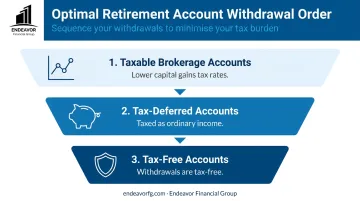
Managing your tax bill in retirement is crucial. By sequencing withdrawals thoughtfully, you can keep more of your money. A common approach is to withdraw from accounts in this order:
- Taxable Brokerage Accounts: These are taxed at lower capital gains rates.
- Tax-Deferred Accounts (Traditional IRAs/401(k)s): Withdrawals are taxed as ordinary income.
- Tax-Free Accounts (Roth IRAs/HSAs): Withdrawals are completely tax-free.
This strategy can help keep you in a lower tax bracket. You might also consider Roth conversions in the years before RMDs begin to reduce your future tax liability.
Planning for Healthcare and Long-Term Care
Healthcare is one of the biggest expenses in retirement. A 65-year-old couple retiring today can expect to spend around $12,850 on healthcare in their first year of retirement alone. It's essential to budget for Medicare premiums, supplemental insurance (Medigap), and out-of-pocket costs.
Furthermore, don't overlook long-term care (LTC). Someone turning 65 today has nearly a 70% chance of needing some type of LTC, which is not covered by Medicare. According to CareScout, the 2025 national median annual cost for an assisted living facility is $74,400, while a private room in a nursing home is over $129,000.
Aligning Investment and Risk Tolerance
What if one spouse is an aggressive investor while the other is highly conservative? This is a common issue. Instead of letting it cause conflict, find a middle ground.
- View the Portfolio Holistically: One spouse might hold more conservative assets (bonds, cash) while the other holds more growth-oriented assets (stocks), creating a balanced portfolio overall.
- Use a "Bucket" Strategy: Divide your assets into three buckets: a short-term bucket (1-3 years of cash for living expenses), a mid-term bucket (3-10 years of bonds and stable investments), and a long-term bucket (10+ years of stocks for growth). This can give the conservative spouse peace of mind while still allowing for necessary growth.
Navigating Common Challenges and Special Situations
Every couple's situation is unique. Here’s how to handle a few common complexities.
- Plan for a longer horizon if there's a significant age gap. This impacts healthcare planning—especially bridging the gap until the younger spouse is Medicare-eligible—and requires more complex Social Security and RMD strategies.
- Integrate complex family or business goals. Blended families must balance inheritance plans for children from previous marriages. For entrepreneurs, a business succession plan is a critical piece of the retirement puzzle, often requiring specialized financial and estate planning coordination.
- Address unequal retirement savings directly. When one partner has a much larger nest egg, a spousal IRA can help the other catch up before retirement. The goal is a joint income plan that provides security for both, regardless of who "owns" each account.
Your Shared Future Starts with a Shared Plan
A successful retirement for a couple doesn't happen by accident. It's the result of a coordinated, holistic income plan built on open communication and shared goals. By working together, you can optimize your income, manage taxes more efficiently, and build the confidence to enjoy the years you’ve worked so hard for.
If you're ready to move from separate accounts to a unified strategy, your first step is to review your assets and goals together.
For couples navigating complex finances, working with a Certified Financial Planner® can provide the objective roadmap you need for your shared future.
Frequently Asked Questions
What is the 50/30/20 rule for couples?
This guideline allocates 50% of after-tax income to needs, 30% to wants, and 20% to savings. Couples use it to create a joint budget, track shared expenses, and ensure they meet combined retirement savings goals.
How many couples have $2 million in retirement savings?
Very few. Data shows the typical worker aged 55-64 has a combined 401(k)/IRA balance of $150,000. The right amount for you depends on your specific lifestyle and spending, not a generic benchmark.
How should a couple decide when to claim Social Security?
This decision depends on health, life expectancy, and each spouse's earnings history. Often, the best strategy is for the higher earner to delay claiming until age 70 to maximize their payment and the potential survivor benefit.
What is the best way to handle required minimum distributions (RMDs) as a couple?
RMDs are calculated for each tax-deferred account (Traditional IRA, 401(k)). Couples should total these amounts and plan withdrawals to minimize their combined tax burden. A Qualified Charitable Distribution (QCD) can also satisfy RMDs while reducing taxable income.
Should we combine our retirement accounts or keep them separate?
Retirement accounts like 401(k)s and IRAs are individual by law and cannot be jointly owned. However, you should absolutely manage them with a single, coordinated investment strategy that reflects your shared goals and risk tolerance.
What happens to retirement accounts when one spouse passes away?
A surviving spouse named as the beneficiary can typically roll the deceased's retirement funds into their own IRA. This allows the money to continue growing tax-deferred and be managed under their own RMD schedule for greater flexibility.