
The landscaping industry runs on deep client relationships, specialized equipment, and the irreplaceable knowledge of key leaders. A sudden change at the top isn't just a hiccup; it can unravel years of hard work. With over 52% of U.S. business owners being age 55 or older, the question of "what's next?" is more urgent than ever.
This article explains why succession planning isn't just a retirement strategy. It's an essential tool for protecting the value, legacy, and long-term health of the business you’ve poured everything into building.
TL;DR: Your Landscaping Business's Future Plan
- Succession planning ensures a smooth leadership transition, protecting your company's value.
- Key benefits include operational continuity, preserved client relationships, and a higher sale price.
- Ignoring it risks operational chaos, lost clients, diminished business value, and family conflicts.
- To maximize value, start 5-10 years early, train successors, get a professional valuation, and consult financial experts.
What Is Succession Planning in a Landscaping Context?
Succession planning is the process of identifying and preparing the next generation of leaders to take over your business. It’s a formal roadmap for transitioning ownership and management, whether to a family member, a key employee, or an external buyer.
But it's not just about replacing the owner. A solid plan also accounts for other critical roles by asking key questions:
- Who takes over if your lead foreman with 20 years of experience retires?
- What happens if your office manager—the only person who knows every client contract—leaves unexpectedly?
Think of it as a strategic process for ensuring your business can thrive long after you step away, preserving the legacy and value you've worked so hard to create.
Key Advantages of Succession Planning for Landscaping Companies
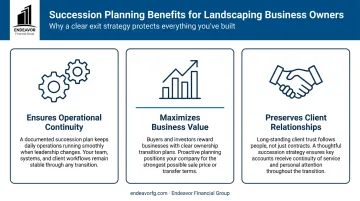
A succession plan does more than outline your exit; it strengthens your business today and boosts its financial health for tomorrow.
Ensures Operational Continuity and Consistency
A plan prevents chaos when a key person leaves. It ensures that projects continue on schedule, bids go out on time, and the quality of your work remains high. This is especially vital in an industry where 71% of small businesses depend heavily on one or two key people.
In practice, this means documenting core processes for bidding, project management, and client communication. By cross-training crew leaders and key staff on essential tasks, you create redundancy that makes the business more resilient. This is crucial for landscapers because so much of the business relies on institutional knowledge—like the specific needs of a long-term client or the most efficient mowing patterns for a large property—that must be transferred, not lost.
Protects and Maximizes Business Value
A documented succession plan makes your company more attractive to potential buyers because it demonstrates stability and reduces their risk. An organized business is a valuable business. Yet only 34% of small-business owners have a written plan, leaving significant value on the table.
The planning process involves a professional business valuation that assesses more than just your trucks and mowers; it includes recurring revenue from maintenance contracts, the strength of your client list, and your brand's reputation. Since a landscape company's value is often tied to the owner's relationships, a formal plan shows buyers exactly how those connections will be transferred, protecting key assets and justifying a higher price.
Preserves Client Relationships and Company Legacy
Landscaping is a relationship business. A sudden leadership change can make your best clients nervous and give competitors an opening. A succession plan allows for a gradual and managed transition, giving clients time to build trust with the new leadership.
A "warm handoff," where the owner introduces the successor to key clients over months or even years, makes customers feel valued and confident. With customer retention being paramount in the landscaping industry, this smooth transition protects your loyal client base and revenue stream. It also ensures the company's values and commitment to quality are carried forward by the new leadership.
What Happens When Succession Planning Is Ignored?
Failing to plan is planning to fail, and for a landscaping business, the consequences can be devastating. Here are the common, avoidable pitfalls that unprepared companies face.
Operational Disruption and "Key Person" Risk
Without a plan, the sudden loss of the owner or a key foreman can bring operations to a grinding halt. Active projects are jeopardized, crews are left without direction, and both staff and clients are thrown into a state of confusion.
This operational chaos directly impacts day-to-day revenue and the company's long-term reputation.
Diminished Business Value and Forced Sale
An unplanned exit due to illness, death, or another emergency often leads to a "fire sale." The business may have to be sold quickly and at a fraction of its true value because buyers see the lack of a transition plan as a massive risk.
It's no surprise that experts at the Exit Planning Institute report that only 20% to 30% of businesses that go to market actually sell—readiness is a major factor.
Family or Partner Conflict
For family-run or partnership-based businesses, the absence of a clear, legally sound plan is a recipe for disaster. Disagreements over who should take over, how the business should be valued, or whether to sell can escalate quickly.
These conflicts can lead to costly legal battles that drain the company's resources and destroy personal relationships. In fact, 60% of succession failures in family businesses stem from conflict.
How to Get the Most Value From Your Succession Plan
A great plan isn't a document you create once and file away. It's a living strategy that you build thoughtfully and review regularly.
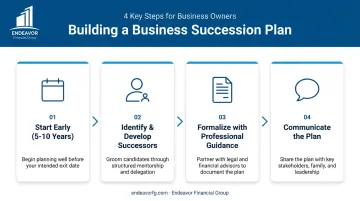
Start Early and Be Proactive
The ideal time to begin succession planning is 5-10 years before your target exit date. This timeframe isn't arbitrary; it gives you enough runway to properly groom successors, optimize your company's financials, and make adjustments based on market conditions. Starting early shifts you from a reactive position to one of strategic control.
Identify and Develop Your Successors
Look for potential successors both inside and outside your company. Is there a dedicated crew leader who shows leadership potential? A family member with a genuine interest in the business?
Once you've identified candidates, invest in their development. Give them increasing levels of responsibility. A great "test run" is to let a potential successor manage the business while you take an extended vacation. This provides real-world experience for them and valuable insight for you.
Formalize the Plan with Professional Guidance
Building a succession plan involves complex financial, legal, and tax considerations that go beyond day-to-day operations. Assembling a team of experts is critical. This team should include an attorney, a CPA, and a financial advisor.
A financial advisor specializing in business owners can be the quarterback of this process. At Endeavor Financial Group, we help business owners create a clear financial roadmap that aligns the sale of their business with their personal retirement goals.
As fee-only fiduciaries, our role is to coordinate with your legal and tax professionals to structure a tax-efficient transition that protects the value of your life's work.
Communicate the Plan Clearly
Once the plan is formalized, it's important to communicate it to key stakeholders—family members, co-owners, and essential employees—at the appropriate time. Managing expectations and being transparent about the future reduces uncertainty and helps ensure everyone is aligned for a smooth transition.
Your Legacy is Worth Planning For
For a landscaping business owner, succession planning is the ultimate act of strategic leadership. It’s about taking control of the future you envision for the company you have worked so hard to build.
The rewards are clear: seamless operations, maximized business value, and a protected legacy for your employees and clients. Treat your business's future with the same care and foresight you apply to your most ambitious landscape designs. Securing that future is the most important project you'll ever manage.
Frequently Asked Questions
What is the best business structure for landscaping?
The most common structures are an LLC or an S-Corp, which offer liability protection. The best choice depends on your specific tax situation, liability concerns, and long-term goals, so it's wise to seek professional advice.
When should a landscaping business owner start succession planning?
Ideally, you should start the formal process 5-10 years before your planned exit. However, it's never too early to begin documenting processes and identifying key employees to prepare for unexpected events.
What are the most common exit strategies for a landscaping company owner?
The main options include transferring the business to a family member, selling to key employees through a management buyout (MBO), or selling to an external third party or another landscaping company.
How do you value a landscaping business for succession?
A professional valuation assesses tangible assets (trucks, equipment) and intangible assets like client lists and recurring maintenance contracts. These contracts and your company's reputation are often the biggest drivers of the final price.
What's the difference between succession planning and an exit plan?
An exit plan is about the owner's financial exit from the business. Succession planning is a broader strategy focused on preparing the next leader and ensuring the company's long-term health after you depart.
Can key employees take over a landscaping business?
Yes, a management or employee buyout is a common and effective strategy. This approach ensures leadership transitions to people who already know your operations, clients, and company culture.