
This is where trusts come in. Yet, a 2024 study from Bank of America found that while 56% of wealthy individuals have a trust, only 27% feel they understand them well. This guide will demystify the process, offering a clear roadmap for using trusts to build a durable retirement income stream. We’ll cover the best trusts for the job, the setup process, and critical mistakes to avoid.
Key Takeaways
- Trusts allow HNWIs to create a controlled income stream while protecting assets from creditors and minimizing estate taxes.
- Key trusts for retirement income include Revocable Living Trusts, Charitable Remainder Trusts, and Irrevocable Life Insurance Trusts.
- The setup process requires defining clear goals and assembling a team of a financial planner, attorney, and CPA.
- Success hinges on choosing the right trustee, funding the trust correctly, and designing a smart distribution plan.
Why Trusts Are a Cornerstone of HNW Retirement Income Planning
For high-net-worth families, retirement income planning is less about drawing down a single account and more about orchestrating a durable financial structure. A trust is not just a legal document; it's a powerful vehicle for managing, protecting, and distributing wealth according to your specific wishes, long after you stop working.
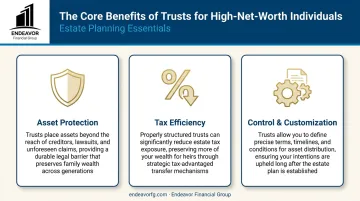
Here are the primary benefits trusts bring to the table for generating retirement income.
Asset Protection
Certain types of irrevocable trusts can create a powerful shield between your personal wealth and future potential creditors, lawsuits, or even marital disputes. By legally transferring assets into a properly structured trust, you separate them from your personal ownership. This ensures that the principal generating your retirement income remains secure, no matter what financial challenges may arise.
Tax Efficiency
Strategic trust planning can significantly reduce your tax burden, particularly concerning estate taxes. With the federal estate tax exemption set to be cut roughly in half after 2025, proactive planning is more critical than ever.
Assets held in specific irrevocable trusts—like an Irrevocable Life Insurance Trust (ILIT) or a Spousal Lifetime Access Trust (SLAT)—are generally excluded from your taxable estate. This ensures more of your wealth can be used for retirement income or passed to heirs instead of being paid in taxes.
Control and Customization
Trusts offer unparalleled control. As the grantor, you set the rules, dictating precisely how and when income is distributed to beneficiaries—including yourself. This structure allows you to create a predictable income stream while preventing potential mismanagement by heirs.
You can also add specific provisions to protect assets, such as a "spendthrift" clause to shield a beneficiary from poor financial decisions or tying distributions to certain life events. This ensures your legacy is managed exactly as you intended.
Key Types of Trusts for Generating Retirement Income
Not all trusts are created equal. The right choice depends entirely on your goals for income, control, tax savings, and legacy. Here are four key types that HNWIs frequently use to build their retirement income strategy.
Revocable Living Trust (RLT)
A Revocable Living Trust (RLT) acts as the central hub for your financial life. It’s a flexible tool that holds your assets while you're alive, and you can change or cancel it at any time.
For retirement, you can structure it to pay you a regular income from the assets it holds. Its primary benefits are simplifying asset management and avoiding probate. However, because you retain control, assets in an RLT are still part of your taxable estate.
Charitable Remainder Trust (CRT)
A Charitable Remainder Trust (CRT) is ideal for those who are charitably inclined. You transfer highly appreciated assets (like stocks or real estate) into an irrevocable trust, which can then sell the asset without immediately triggering capital gains tax.
In return, the CRT pays you or your beneficiaries an income stream for a set term (up to 20 years) or for life. When the term ends, the remaining assets go to your chosen charity. According to guidelines from Fidelity Charitable, the annual payout must be between 5% and 50% of the trust's assets.
Irrevocable Life Insurance Trust (ILIT)
An Irrevocable Life Insurance Trust (ILIT) is designed to own a life insurance policy, effectively removing the policy's value and death benefit from your taxable estate.
While it doesn't provide income to you directly, it creates a pool of tax-free cash for your heirs upon your death. This liquidity can supplement a surviving spouse's retirement income, pay off debts, or cover estate taxes, preserving other income-generating assets.
Spousal Lifetime Access Trust (SLAT)
A Spousal Lifetime Access Trust (SLAT) is an advanced strategy for married couples. One spouse (the donor) gifts assets into an irrevocable trust for the other spouse (the beneficiary), removing the assets and their future growth from the couple's combined taxable estate.
The beneficiary spouse can receive distributions from the trust, providing an indirect source of funds for the couple's retirement needs while protecting the assets for the next generation.
How to Set Up a Trust-Based Retirement Income Strategy
Creating a trust-based income plan isn't a DIY project. It requires careful planning and coordination among a team of professionals. Here’s a step-by-step look at the process.
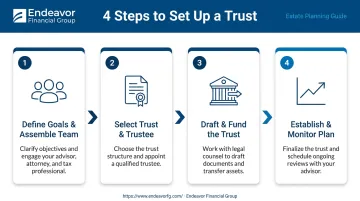
Step 1: Define Your Retirement Income Goals and Assemble Your Team
Before any documents are drafted, you need clarity on your objectives.
- How much after-tax income will you need annually?
- Who are the primary beneficiaries during your life and after?
- What are your goals for asset protection and legacy?
Answering these questions requires a coordinated team. Your estate planning attorney drafts the trust documents, while your CPA manages the tax implications.
A comprehensive financial planner, such as a professional from Endeavor Financial Group, coordinates these efforts. Their role is to act as the "quarterback" to ensure your legal, tax, and financial strategies all work in concert toward your goals.
Step 2: Select the Appropriate Trust Structure and Trustee
Based on the goals from Step 1, your team will help you choose the right trust or combination of trusts. If flexibility is your top priority, an RLT might be the starting point. If maximizing your legacy and reducing estate taxes is the main goal, an irrevocable trust like a SLAT or ILIT may be more appropriate.
Equally important is selecting a trustee—the person or institution that will manage the trust. You can choose a family member, a trusted friend, or a professional corporate trustee. Consider their financial expertise, impartiality, and ability to serve for the long term.
Step 3: Legally Draft and Fund the Trust
Once the structure and trustee are chosen, your attorney will draft the legal trust document. This document is the rulebook, specifying the grantor, trustee, beneficiaries, and instructions for distributions.
However, the document itself is powerless until the trust is funded. This is a critical step where you legally retitle your assets—such as real estate deeds, brokerage accounts, and business interests—into the name of the trust. An unfunded trust provides zero benefits.
Step 4: Establish the Distribution Plan and Monitor Performance
Your trust document will outline the rules for paying out income. You might structure it for:
- Fixed monthly or annual payments.
- Distributions of all trust income.
- Payments based on a percentage of the trust's assets.
- Discretionary distributions made by the trustee based on your needs.
A trust is not a static tool; it requires ongoing oversight to remain effective. Regular monitoring ensures the trust's investments perform as expected and allows for adjustments due to life events or changes in tax law.
This is why a structured review process is critical. For example, the five-step process at Endeavor Financial Group includes ongoing support to ensure the plan adapts as your life and the relevant laws change.
Key Factors That Determine Your Trust's Success
Setting up a trust is just the beginning. Its long-term effectiveness depends on several key decisions made during the planning process.
Trustee Selection
This is one of the most critical decision you'll make. While a family member may understand your personal dynamics, they might lack the financial expertise, time, or objectivity to manage the trust properly. A professional corporate trustee offers expertise, impartiality, and continuity, but comes at a cost. Weigh the pros and cons carefully to find the right fit for your family’s needs.
Asset Funding Strategy
Choosing which assets to place in which trust is a strategic decision. For instance:
- Highly appreciated assets: Place assets like stocks or real estate in a Charitable Remainder Trust to defer capital gains taxes.
- Cash: Use this to fund an Irrevocable Life Insurance Trust (ILIT) to pay for policy premiums.
- High-growth assets: Move these into a Spousal Lifetime Access Trust (SLAT) to shift future appreciation out of your taxable estate.
State Jurisdiction (Domicile)
Trust laws vary significantly from state to state. Choosing a favorable jurisdiction, or "domicile," for your trust can provide significant advantages.
States like Delaware, Nevada, and South Dakota are popular choices. They may offer stronger creditor protection or have no state-level income tax on trust earnings, increasing the after-tax income the trust can generate.
Common Mistakes When Using Trusts for Retirement Income
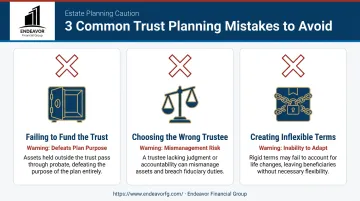
Even the best-laid plans can go wrong. Improper setup or management can completely undermine a trust's benefits. Here are three common pitfalls to avoid.
Mistake 1: Failing to Properly Fund the Trust
A beautifully drafted trust is worthless if no assets are legally titled in its name—the most common and damaging error. If you pass away with an unfunded trust, those assets will likely go through probate, defeating one of its main purposes.
Mistake 2: Choosing the Wrong Trustee
Appointing a trustee who isn't up to the task can lead to disaster. A family member might face conflicts of interest, while an individual trustee may lack the investment knowledge to manage assets effectively. Both scenarios jeopardize the trust's ability to generate the income you need.
Mistake 3: Creating Inflexible Distribution Terms
Life is unpredictable. Drafting rigid distribution rules that can't adapt to changing circumstances—like a medical emergency, high inflation, or a beneficiary's special needs—is a major risk.
A well-drafted trust should include provisions for flexibility, such as granting discretionary power to the trustee or appointing a "trust protector" who can modify terms if needed.
Avoiding these pitfalls requires careful planning and coordination between your financial advisor and estate planning attorney to ensure your trust functions as intended.
Frequently Asked Questions
What is considered high net worth for a financial advisor?
Generally, it begins at $1 million in investable assets. However, HNW planning focuses more on managing financial complexity—such as business ownership or intricate estates—than a specific number.
Can a trust provide a regular income in retirement?
Absolutely. Trusts are excellent vehicles for this purpose. The trust document can be written to mandate fixed monthly payments, annual distributions based on a percentage of the assets, or payments of all income the trust generates.
What is the difference between a revocable and irrevocable trust for retirement income?
A revocable trust can be changed or canceled by the creator, offering maximum flexibility. An irrevocable trust is permanent, providing stronger asset protection and estate tax benefits by removing assets from your personal ownership.
How are distributions from a trust taxed?
The tax treatment depends on the trust type. Generally, if a trust distributes income to a beneficiary, that income is reported on the beneficiary's personal tax return, and they are responsible for paying the tax on it.
Do I still need a will if I have a trust for my retirement assets?
Yes, a will remains crucial. A "pour-over" will acts as a safety net, automatically transferring any assets you forgot to place in the trust into it upon your death, ensuring your complete estate plan is executed as intended.